About Rolling Horse Ranch
Personnel
Ellen S. Kaye Gehrke, Ph.D.
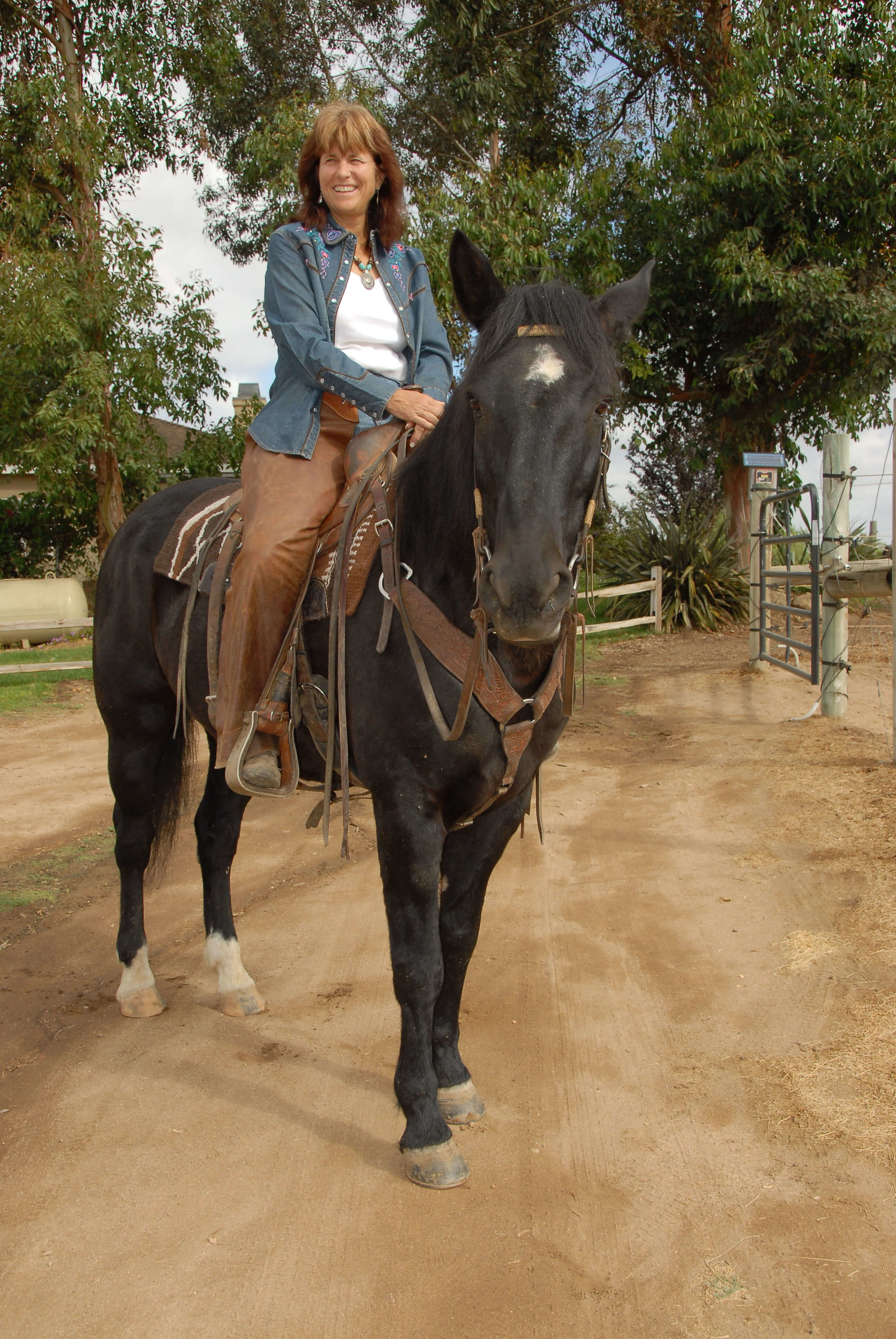
Dr. Kaye Gehrke is a professor of international business and management at Alliant International University in San Diego. She has over 25 years experience working as an organizational consultant, trainer, and advisor for numerous companies. Her work with people and human systems spans the private and public sector, universities and international organizations in the USA and several European countries. She has served in many leadership roles in professional organizations such as the Academy of Management, the American Society for Training and Development and is a LEAD San Diego graduate. Her primary areas of expertise include organizational development, strategic management, cross cultural training, and business and management skills improvement. She has a Ph.D. in organizational development and strategic planning, an M.B.A. in marketing and management and a B.Sc. in wildlife biology and natural resource management. She lived in Europe for eight years before returning to the USA and has worked for Alliant since 1997. She is a consultant with the Thiagi Group and a licensed provider for the 1:1 HeartMath strategies for coherent performance course.
Since 1997, when she bought her first horse, Cougar, she has passionately explored the world of horses and people. She adopted, gentled and trained several wild mustangs, has a business where she retrains ranch horses and offers them for sale as safe and fun trail riding horses. She has helped many people gently start horses who have never been ridden. As she was struggling with her first mustang, Tonopah, she realized how much her learning and interaction with him transferred to her work and interaction with her family, friends, and clients. Her exploration of horses as cofacilitators for leadership led her to discover the growing field of equine facilitated learning. Dr. Kaye Gehrke is a member of the North American Handicapped Riders Association (NAHRA), the Equine Facilitated Mental Health Association (EFMA), the Equine Guided Education Association (EGEA) and is an intern in the Adventures in Awareness Merit program.
Horses as Cofacilitators
Philosophy of Working with Horses
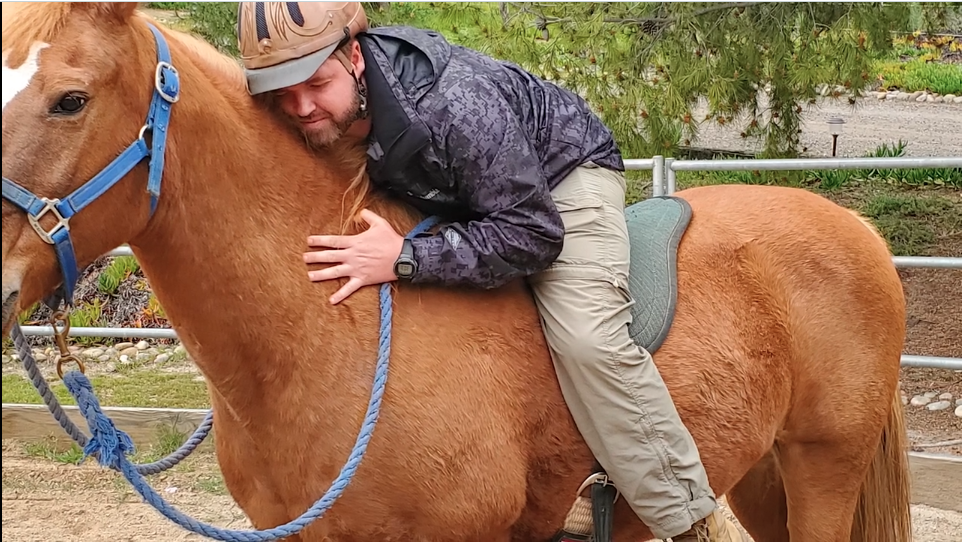
A core philosophy is that horses are truly partners in RHR training. You will find some "fun" activities in other similar programs; however, horses are often "used" in these programs as tools and objects for the lessons, not partners. They are often treated in a manner that mirrors authoritative leadership, not coherent leadership—using force and coercion to create a learning moment for participants. At RHR, we are committed to changing the leadership and organizational environments we live and work in by respecting our partnerships with horses and creating more magnetic relationships with them—one that reflects fun, cooperation, mutual respect, willingness, and high performance. A great deal of time and energy goes into honoring and engaging the RHR horses as cofacilitators, sentient beings who have much to offer in learning and awareness.
Why Horses As Partners?
Horses are like energetic magnets for humans. They are responsive beings, have an awareness of, and sensitivity to their surroundings, have individual personalities, don't care about a person's position, power, status, race, color, gender, how much money they make, who they know or where they have been. They are totally honest and have no hidden agendas. They have an uncanny ability to accurately sense energetically your level of trust, confidence, awareness, and interpersonal skills and thus allow an opportunity to learn what is needed in order to succeed in personal and professional relationships.
Horses offer humans powerful insights into concepts such as leadership, credibility and integrity, effectively working together, and non-verbal comunication. Horses instinctually live in a family system that has rules that parallel similar rules in human systems. A hierarchy exists within all horse herds, similar to organizational environments. In the herd, the leader position is dynamic and can be a changing process as individual horses challenge the horse above them in the order. The position in the herd is important, determining many things including who eats first or who eats at all if there are limited resoruces. Key to their survival is effective communication and developing relationships with other members of the herd—the same key issues important to human effectiveness.